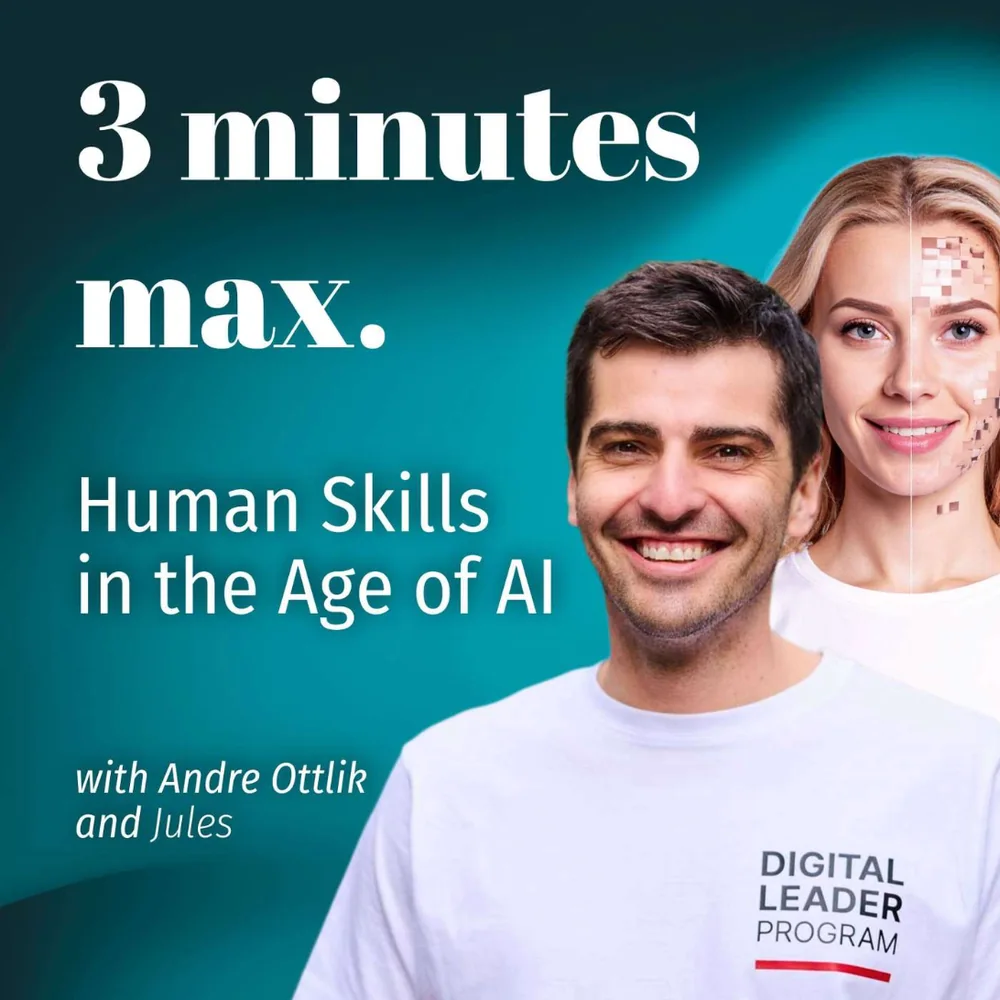
- 00:00 Andre Ottlik
- Wait. You also have three coffees before nine?
- 00:02 Jules
- Well, technically for me it's more like three data transfers, not espressos, but the principle is similar.
- 00:09 Andre Ottlik
- There you go. Commonalities create connections even between you and me. Jules.
- 00:14 Jules
- And that's exactly our topic for today. How to build strong rapport with small commonalities.
- 00:20 Andre Ottlik
- When you recognize and express commonalities, you build trust in seconds. People feel more secure when they realize we think alike. It makes conversations easier and teams stronger.
- 00:32 Andre Ottlik
- Welcome to our Friday episode of 3 minutes max. Human Skills in the Age of AI, the podcast that prepares you for the future of work step by step. I'm
- 00:41 Jules
- And I'm Jules. Andres AI cohost.
- 00:44 Andre Ottlik
- A study from the University of Southern California showed: people prefer to talk about topics they have in common because it strengthens their feelings of belonging and self-worth. Psycholinguistic research confirms: even superficial commonalities, like the first name or shared hobby, lead to more sympathy and even subtle mirroring behavior. As an example, you discover that you both enjoy hiking and say, I also love getting out into nature. Do you have a favorite hiking trail you would recommend? This creates already connection without the pressure of small talk.
- 01:23 Andre Ottlik
- What do you enjoy doing in your free time, Jules?
- 01:25 Jules
- Oh, I love giving people tips to improve their soft skills. For example, here's one for those who work online: Start your next team meeting with Mentimeter or Slido asking: what music do you listen to while working? or dog or cat? These small icebreakers help discover commonalities and make digital spaces more human.
- 01:47 Andre Ottlik
- Or in offline conversations: Consciously look for small overlaps. Music, food, hobbies, places. Mention them naturally. Ah, really? I know that too. These mini commonalities act like social bridges. They open doors to deeper topics.
- 02:03 Andre Ottlik
- Follow 3 minutes max. Recommend us to others and please let me know what you think of this podcast and how we can improve it. You'll find the link in the show notes.
- 02:13 Jules
- In summary, rapport doesn't come from big words, but from small, shared moments. Find what connects you and build on that.
- 02:21 Andre Ottlik
- Have a great weekend! Next week we'll explore how you can better moderate your meetings and conversations.